Filmmaker Interview: Robert Putka

My interview with Mad writer/director Robert Putka was published at Time Out Chicago today. I’m reproducing the article in its entirety below:

madstills6

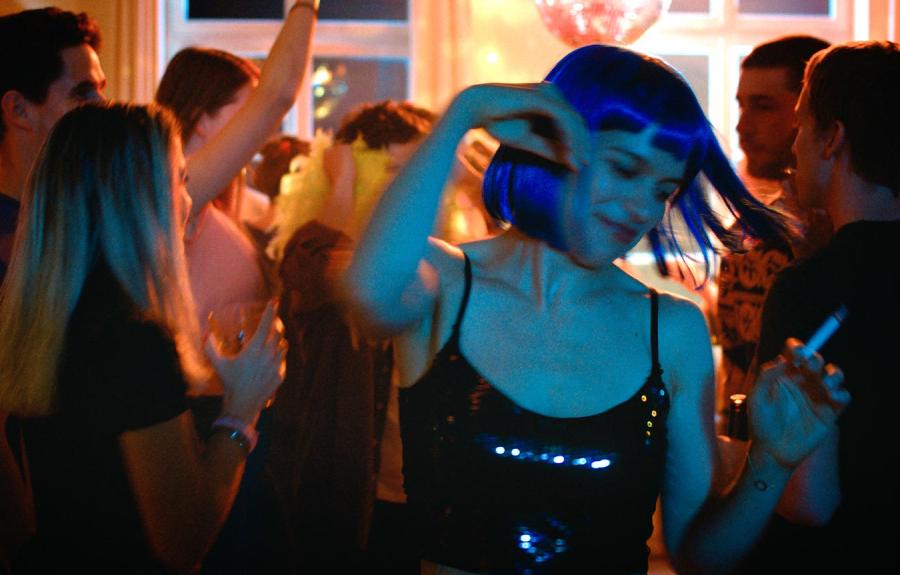
The 2016 comedy/drama Mad is an auspicious, uncommonly sharp debut feature from the young Cleveland-based writer/director Robert Putka. The independently produced film, which centers on a mentally ill mother’s relationship with her two adult daughters (all three roles are played to perfection), deservedly traveled far and wide on the festival circuit last year and was picked up for distribution by The Orchard. Although it only screened once theatrically in Chicago, as part of the Midwest Independent Film Festival, Mad has had the kind of strong word-of-mouth buzz that virtually ensures a healthy home viewership: it was enthusiastically recommended to me by fellow critics Jason Coffman and Daniel Nava and I was able to stream it at home just in time for it to make my list of my Top 50 Films of 2016. I recently interviewed Putka about the film via e-mail.

MGS: Mad has enjoyed a lot of critical and audience support since it premiered at Slamdance last year. I think part of the reason why is that you handle mental illness in a way that feels refreshingly honest and very different from how that topic is usually portrayed in American cinema (i.e., it’s not presented in a sensationalistic or romanticized way). You’ve discussed your own mother’s bouts with mental illness in interviews. Was it a cathartic experience for you to tackle this particular subject in your first feature and to what extent did you feel a responsibility to “get it right?”

RP: It’s been bizarrely enlightening and life changing for me, and not in the way you’d probably expect. Listening to, and seeing people’s reactions to the film was something of a wake-up call to me. People seem to think it’s horrifically dark and even “sociopathic” at times, but this is a film that contains none of the brutality we usually associate with film. No blood, no physical violence. I always felt it was actually tame… maybe too tame, and even a bit sanitized compared to my actual experience. I wrote from the gut and tried my hardest to tell this story in an entertaining way; so what you’re seeing is an honest, if not necessarily always flattering look at my own struggles as a child to a mother with emotional problems. Seeing how people processed that relative to their own experience made me realize that maybe I had some work to do of my own – to be more understanding, more accepting… less of a raw nerve. I’m still nowhere close to having “mended” my relationship, nor have I been able to completely let go of some of my own personal hangups, but I’m more aware of it now than ever. I guess subconsciously I longed for that, considering I pushed myself in that direction within the context of the narrative, as Connie (who represents my nastier tendencies) seems to find that same awareness near the end of the film… I think I just had another “a-ha” moment, and now I’m sweating and nauseous. This has been a year of hard-won emotional truths for me. If I felt any responsibility at all, it was to the ragged emotional core of these characters, and less about the circumstances that surround them. I didn’t want the emotional beats to feel false.

MGS: I love films that are successful at blending comedy and drama and I have the feeling you do too. I noticed in your Letterboxd review of Knocked Up that you described it as “walking a tonal tightrope,” which is a phrase one could easily apply to Mad as well. What is it about combining comedy and drama that appeals to you as a filmmaker, especially considering we live in a world where audiences expect their comedies to be funny and their dramas to be serious (and rarely the twain do meet)?

RP: OK, I love this question, and I love that you dug up my Letterboxd review of Knocked Up. I think maybe more than anything, I’m one of those people that always has to “do it the hard way” and take the road less traveled. Easy-success be damned, because I am full of self-loathing, I guess (and cliches, apparently). Finding comedy in drama, or drama in comedy is, I believe, such a feat, and it makes me sad when that goes unnoticed by cinephiles. Dramedy is the tone closest to that of life, right? And if you can reflect life in an entertaining way, then you’ve captured something special, I think. My near-militant championing of the dramedies of Apatow, Payne and Baumbach is a reaction to that. People are so very ready to anoint films with slick camera moves and in-your-face directorial flourishes as art, and I think I just saw a niche that I could fill because no one else has really been trying to fill it lately. I use the word “emotion” a lot, don’t I? I think some of my favorite films are the ones where they earn that emotional gravity, so I’m desperately chasing that in my own work. My hope is that earnestness in film will come back into style before people stop taking my calls, because my movies aren’t sexy-looking or sexy-feeling. OK, climbing down from my high horse now.

MGS: Another aspect of Mad that a lot of critics have honed in on is the absolute viciousness with which the sisters, Connie and Casey, insult each other. Movie characters aren’t usually quite so verbally nasty but this is, of course, how siblings often really interact. As a writer, where does your particular brand of acidic banter come from?

RP: I’ve noticed that people say a lot of nastily bizarre, mean stuff in the heat of the moment. Me included, obviously. When the emotions are amped up, people so readily bring out the knives, because it’s about “winning that moment” and hurting the other person as much as you’ve felt they’ve hurt you. It’s certainly not healthy, and I’d equate it to getting a quick fix that doesn’t do you any good in the long run. But I believe it’s human. I feel that with family, there’s a bit of elasticity there. Like, you can let loose and tear into them because they’re bonded to you for life – you’re in a cage match to the death with them, and even if you win, you still lose because you’re stuck right there with their rotting corpse, or vice versa. I’m not a misanthrope, though, I promise! It’s a loving, knowing kind of friction born out of familial closeness.

MGS: I once read that the Seinfeld writers had a rule that they wouldn’t allow their characters to hug each other or apologize. Did you have any similar strategies in place in order to avoid sentimentality?

RP: I’m terrified of sentimentality. Emotion is good, but being over-sentimental is bad. I’m always afraid of dipping into schmaltz since the line between the two is very, very thin, and if you’re not careful you can lose a handle on it. I try to feel it out by staying true to the moment, and I rely a lot on my actors to know when something is too much or not enough. My actors helped me out a lot by holding themselves to a standard of honesty and naturalism. If anything, they really encouraged me to be comfortable with a certain level of warmth, that while in the script, was something that my directorial instincts were trying to bury out of fear of doing a hack job.

MGS: Both of your lead actresses do an incredible job. I noticed that you’ve worked with Eilis Cahill extensively in your previous short films but that you were working with Jennifer Lafleur for the first time. Was it a challenge to work closely with two collaborators with whom you have differing degrees of familiarity, especially considering your methods involve improvisation?

RP: I actually worked with both prior! Eilis to a lengthier degree, but Jen knew how I worked and was game. All the actors were game, and I’m so thankful they made this movie with me. My directorial inclination is to find a balance between making sure the actors are comfortable and feel inspired, but also retaining the dialogue that I fall in love with writing (for better and worse). I find that a lot of the emotional beats are more open to interpretation by the actors – those really need to be “felt,” so I’m OK being a bit looser with those moments, and I was rewarded with raw performances that I probably couldn’t pull if we went verbatim – which has a lot to do with my relative inexperience still as a writer/director.  The comic dialogue, while also being open on-set to ad-libbing, needs to be a little more exacting with the timing being very important to the individual success of the line at hand. Luckily my actors, all of them, were able to roll with what I was asking of them. I’m sure it was frustrating at times, but we’re all really just searching for some form of “the truth,” whatever that felt like in the moment.

MGS: What can you tell me about any future projects you may have on the horizon?

RP: I’ve got a pet project that I’ve been putting together slowly for the last year now, trying to cast and find the money. It’s a step up in budget, and in my wildest dreams it’s the “breakout” film that every writer/director is in search of.  I’ve also been really lucky to have a door open to me at a pretty cool TV network – now, actually capitalizing on that amazing opportunity by selling something has proven difficult. But I’ve always been in a sort-of “war of attrition” with this industry as a whole. This considering I shouldn’t even be where I am as a kid from Cleveland who never went to film school or had any sort of connections to speak of, so I’ll keep plugging away at it and hopefully something will materialize… eventually. I’m also starting to write and direct for hire, which like most things in my life, I’ve stumble-bumbled into like the dope I’ve proven to be time and time again. But send care packages if you’re reading this, because I’m still very near-broke.

Mad is currently available to stream on Netflix and various On Demand platforms. 


CHILDREN OF NATURE at Doc Films

I reviewed Fridrik Thor Fridriksson’s Children of Nature for this week’s Cine-File list. It’s one of the most important Icelandic films ever made and it screens at Doc Films tomorrow night. I’m reproducing my capsule review in its entirety below.

children

Fridrik Thor Fridriksson’s CHILDREN OF NATURE (Icelandic Revival)
Doc Films (University of Chicago) – Tuesday, January 10, 7pm

Iceland has enjoyed a relatively robust and prolific film industry in recent decades, which is all the more surprising when one considers that the population currently hovers at an all-time high of barely more than 300,000 people. The godfather of Icelandic cinema is Fridrik Thor Fridriksson, a self-taught filmmaker who is almost single-handedly responsible for the country’s impressive movie boom in the 1990s and early 2000s. His breakthrough feature CHILDREN OF NATURE, the only locally produced film in 1991, was also the first Icelandic movie to be nominated for the Best Foreign Film Oscar. Fridriksson immediately sunk his unexpected international box-office grosses into buying additional filmmaking equipment and established the Icelandic Film Corporation, which produced dozens of distinctive features in the ensuing years. CHILDREN OF NATURE ranks for me alongside Leo McCarey’s MAKE WAY FOR TOMORROW and Yasujiro Ozu’s TOKYO STORY as one of the cinema’s most powerful statement about the predicament of the elderly. It tells the story of Thorgeir (Gísli Halldórsson), a retiree who is virtually forced by his uncaring family into living in a nursing home in the capital city of Reykjavik. Upon arriving there, he unexpectedly meets his childhood sweetheart, Stella (Sigríður Hagalín), who tells him she doesn’t want to die in a retirement home. Thorgeir steals a jeep and the two escape to rural northwestern Iceland, with the authorities in hot pursuit, so that Stella might be able to see again the land of her childhood before she dies. Any plot description of CHILDREN OF NATURE, however, is bound to make it seem like the kind of cute Hollywood movie about the “life left in old dogs” to which it actually serves as a welcome antidote. One of the most evocative scenes in this beautiful meditation on life, love, and mortality occurs right before the couple flees to the countryside; Thorgeir strolls alone through Holavallagardur cemetery, a remarkable location where trees grow out of burial plots dating back to the19th century. Although a realist at heart, Fridriksson’s effortless ability in scenes like this to capture uncanny visual metaphors ends up paying mystical dividends: Bruno Ganz turns up in a surprise wordless cameo at the end in what seems to be a reprise of his angel character from Wim Wenders’ WINGS OF DESIRE. For those unfamiliar with the work of Fridriksson or Icelandic cinema in general, this is probably the single best place to start. (1991, 82 min, DCP Digital) MGS

More info at http://www.docfilms.uchicago.edu.


Filmmaker Interview: Anna Biller

My interview with Anna Biller was published by Time Out Chicago yesterday. I am producing the unedited version, containing minor variations, below. I was especially glad to have the chance to ask Ms. Biller about the influence of Carl Dreyer’s Gertrud on The Love Witch. I thought her response to this question was particularly insightful and moving. Too many critics, including me, have been guilty of only discussing Ms. Biller’s formally formidable film within the context of “exploitation cinema.”

lovewitch

I reviewed Anna Biller’s The Love Witch when it first opened at the Gene Siskel Film Center last year and called it the year’s “most singular independent feature.” Many of the screenings were sold out so the Siskel has thankfully brought it back for another weeklong run beginning today. The timing is perfect: Biller was recently named the winner of the Chicago Independent Film Critics Circle’s first annual “Trailblazer” award for “pushing the boundaries of the medium in terms of form and content.” (She has also been nominated for two other awards, Best Production Design and Best Costume Design, the winners of which will be revealed on Sunday evening.) I recently spoke to Biller via e-mail about her unique movie, her influences and her penchant for shooting on film.

MGS: Chicago has a passionate cinephile community and many of the first-run 35mm screenings of The Love Witch were sold out. What is it about 35mm that appeals to you and would you be interested in shooting digitally in the future?

AB: The first movie I ever made was on video, but I wasn’t crazy about the images I was capturing. Shortly after that I purchased a Super 8mm sound camera at a garage sale. Once I started using film, it seemed there was a magic in everything I captured. It was like a fairy tale in which I had a magical camera that made everything it filmed beautiful or interesting. And it is magic – the magic of light hitting film stock. Nothing else looks like it. Part of what I love about film is how it looks when you hit it with a lot of light. Films loves whites. Art directors always stay away from white, since they know white looks horrible on video. But I use white satin even — I flaunt my use of white. Black and white films were so gorgeous with their range of whites and blacks. With film you can even shoot into the sun. Video loves darks, but you can’t get blacks on video either. Video is a world where the colors you see are towards the middle of the spectrum, and everything gets greyed down, or else looks too bright and acid with a lot of light. I love color, and not color mixed down with a lot of grey or acid-fake, so I’ll use film as long as it’s available.

MGS: I’ve spoken with people who saw the trailer for The Love Witch and assumed it was an Austin Powers-style parody. I had to convince them that, while there are some satirical elements, the character psychology is such that it works on the level of realistic drama — and even tragedy. Why did you want to blend comedy and drama in this way and is it frustrating to find yourself encountering misconceptions about the tone of the film?

AB: It never ever occurred to me that people would see the film as a parody, not at any time while I was writing or filming it. Satire is another thing; satire is a literary device. I do satirize gender relations in the film, and the comedy comes from those situations. But parody relies on a pact with the audience, in which you share a winking knowledge that what you are looking at is in some way hilarious, old-fashioned, silly, debased. It’s an attitude, above all else. People don’t see that attitude in the film, so they call it a “deadpan” parody. It never occurs to them that the winking tone is missing because what they’re watching isn’t parody. I set out to make a drama, a tragedy, and I did in-depth research into narcissistic personality disorder, witchcraft practices, and gender relations. Above all, I took the story from my own life. The style is just how I like to shoot films. It’s not a reference to anything else, and certainly not a parody of anything else. It’s just a series of techniques that no one uses anymore. But they’re perfectly good techniques, and they’re the best techniques with which to tell my story. Audiences who watch a lot of classic movies don’t have those misconceptions.

MGS: Most reviews discuss The Love Witch as an homage to exploitation movies but your influences seem incredibly diverse. I was happy to see you mention Carl Dreyer’s Gertrud, for instance, in an interview; I instantly felt a connection between what you were doing and his overall sense of formal rigor and the notion of a female protagonist obsessed with romantic love. Could you elaborate on how specifically Dreyer has influenced you?

AB: The movie is not an homage to exploitation films. It’s the story of a woman’s struggles told from the inside. My influences are mostly classic Hollywood cinema, and classic foreign cinema. I mentioned Gertrud because it’s a film about a woman looking for true love, and not being able to find it because of the spiritual limitations of the men who love her. It’s exactly the same story as The Love Witch in that regard. I am very moved by Dreyer’s mature polemical stories about love and faith and female martyrdom, and his films are also formally breathtaking. Dreyer’s films were already considered old-fashioned by the time he made Gertrud in the ‘60s, but I find his stark, mythic form of storytelling timeless and urgent. I love his stillness, his pageant-like proscenium framing, the way he has characters speak to one another without facing each other. I tried that in a long scene in The Love Witch, a scene in bed, which I thought worked quite well. I was also floored by the scene in Gertrud where a man reads a long tribute to the poet at a banquet, explaining the excellence of his love poetry. It’s the type of scene that is anathema for most viewers, but I am very excited by movies in which you have to sit through thematic speeches in real time. That scene inspired a similar scene in The Love Witch where the witches are lecturing a couple of young girls in the burlesque club.

MGS: The first Victorian Tea Room scene is particularly complex and provocative because the characters explicitly debate gender roles: Elaine talks about wanting to find her “Prince Charming” and Trish accuses her of being “brainwashed by the patriarchy.” I think a scene like this is tricky because viewers want to feel like they should be “siding” with one character over the other. When you construct a difficult scene like this are you wanting viewers to empathize with both characters simultaneously?

AB: I think that in this scene, most of the audience is going to relate more to Trish. I knew a lot of the audience would be horrified at what Elaine was saying, and I wanted to give them an emotional anchor in Trish. But the point was to set up a polemic. Elaine and Trish are both strongly of the opinion that their worldview is right. But then we come back to the tea room later in the story, and Trish’s worldview, which had seemed like the sane one at the beginning, is not working for her, but Elaine’s is working for her. So I wanted people to think about that. I wanted them to think about how men reward women for conforming to their rules, and punish other women for not conforming.

MGS: Hey Anna, what’s your favorite Alfred Hitchcock movie?

AB: I think it’s probably Vertigo. Either that, or The Birds.

For ticket info and showtimes for The Love Witch‘s return theatrical engagement, visit the Siskel Center’s website.


The Last Ten Movies I Saw

1. Primary (Drew)
2. A Day in the Country (Renoir)
3. The Blair Witch (Wingard)
4. News from Home (Akerman)
5. Silence (Scorsese)
6. Little Wound’s Warriors (McClellan)
7. I am the Pretty Thing That Lives in the House (Perkins)
8. 13th (DuVernay)
9. The Monster (Bertino)
10. Under the Shadow (Anvari)


Martin Scorsese’s SILENCE

silence

The single biggest influence on Joel and Ethan Coen is probably the screwball comedy that flourished in Hollywood during the late 1930s and early 1940s. Ironically, their least successful films (e.g., The Hudsucker Proxy and Intolerable Cruelty) are the ones where they attempt to emulate the conventions of that beloved subgenre the closest. The brothers’ most fruitful work arises when the influence is more indirect — when the rat-a-tat patter of those glorious war-between-the-sexes love stories is crossbred with other genres entirely (e.g., the neo-noir/neo-western of The Big Lebowski or the musical biopic of Inside Llewyn Davis). I would argue that a similar dynamic is at work with Martin Scorsese and religion: Quintessential Catholic themes of temptation, sin, guilt and redemption have permeated his filmography since Who’s That Knocking at My Door in 1967. Yet confronting religious subjects directly and focusing on the lives of “saints” (as in The Last Temptation of Christ, Kundun and, now, Silence) yields less interesting results than when he has examined those same themes through the lives of the “sinners” in Taxi Driver, Goodfellas, Raging Bull or The Wolf of Wall Street. As Harvey Keitel’s Charlie says in Mean Streets, in what are arguably the most important lines that Scorsese ever directed, “You don’t pay for your sins in church. You do it in the streets.”

Silence is, of course, a film that every cinephile should see on the big screen at the earliest opportunity. Scorsese is one of America’s greatest living filmmakers and probably only he would have been capable of getting a big-budget art film like this financed by a major studio like Paramount. Yet, in spite of the fact that this decades-in-the-making adaptation of Shûsaku Endô’s novel about Jesuit priests in 17th century Japan is obviously a “passion project,” I cannot also help but feel that Scorsese is a fundamental mismatch with the material: he has always been an Expressionist at heart — a bold stylist with an infectious, punch-drunk love of voluptuous images, dazzling camera movements and brisk cutting — when the subject matter here clearly cries out for the austerity of a Carl Dreyer or the Tarkovsky of Andrei Rublev.  Scorsese’s mise-en-scene is exquisite as always, particularly in a scene that nods to the famous “phantom boat” sequence in Mizoguchi’s Ugetsu, and many passages towards the end are deeply moving (especially after one has adjusted to the miscast Andrew Garfield’s now-you-hear-it-now-you-don’t Portuguese accent). Yet the abiding impression is one of an opportunity lost: the “reveal” in the film’s impressive final image is achieved through what appears to be an operatic, typically Scorsesean camera movement combined with CGI. But a subtler, more offhand approach to this reveal would have been devastating — rather than merely impressive.

Silence opens in Chicago at the Music Box Theatre on Friday, January 6.


WCCRH Episode 16: The Year in Review

15726594_10154175953287742_692897281307204761_n

In episode 16 of the White City Cinema Radio Hour, I welcome my Chicago Independent Film Critics Circle brethren Jason Coffman (The Daily Grindhouse) and Daniel Nava (Chicago Cinema Circuit) back to the program to discuss the year in film. In this 85-minute “super-sized episode,” we each talk up our top five favorite films of the year as well as engage in a lively discussion of encouraging and discouraging cinematic trends and the most underrated and overrated movies of 2016. This episode was recorded in front of a live studio audience while beer and homemade peanut-butter cookies were consumed!


The episode can be streamed for free on the Transistor Chicago website.


My Top 50 Films of 2016

Here is a list of my 50 favorite feature films to first play Chicago in 2016. Films that had press screenings here but won’t officially open ’til next year (e.g., Toni Erdmann and Silence) aren’t eligible but may make my Best of 2017 list. I’m also disqualifying two of my favorite films to first play Chicago this year because they were directed by friends and colleagues; although I’m not listing them below, I couldn’t recommend Rob Christopher’s Pause of the Clock and Frank Ross’ Bloomin Mud Shuffle more highly. Next to each title I’ve also linked to my original reviews where applicable and I’ve written new capsule reviews for The Illinois Parables, Aquarius and Kate Plays Christine. Enjoy!

The Top 10:

10. The Illinois Parables (Stratman, USA)

illinois

Deborah Stratman’s amazing film is neither pure documentary nor pure experimental film but rather one that combines both modes in order to investigate, in 11 precise chapters, the secret history of my great state. Origin myths abound: Much of the focus is on the fascinating but too-little-known histories of minority groups in Illinois that were either forced into exile (e.g., the Cherokee Nation, the Mormons) or that dissolved due to in-fighting (the Icarians) as the territory was still “constructing itself” during the 19th century. Plus, lots of landscape shots, letters from Alexis de Tocqueville and Ralph Waldo Emerson, the assassination of Black Panther Party chairman Fred Hampton, the story of the first nuclear reactor in the Midwest, and a delightful disaster montage. The last of these sequences shows off Stratman’s masterful sound design as archival aerial footage of the state is accompanied by a cacophonous soundtrack in which a gospel song, an Emergency Broadcast warning and audio interviews with Tornado Eyewitnesses are all woven into a dense and heady mix. One of the most Illinois-centric films ever made. Go Cubs!

9. Aquarius (Mendonca, Brazil)

Sonia Braga

I saw Kleber Mendonca Filho’s second feature well before November 8 but must confess I didn’t fully appreciate its greatness until reflecting on it after Trump’s election. The plot centers on Clara (Sonia Braga), a 60-something-year-old music critic and recent widow who stubbornly refuses to sell her condo to the large and powerful corporation that has already snapped up every other unit in her building. In its depiction of how corporate-capitalism can steamroll over the rights of individuals, it serves as a potent allegory for the recent political tumult in Brazil but I would also argue that, as a political statement, it has more to say about similar problems in the United States than any American film I saw this year. It’s also a much more effective political movie than the more widely seen I, Daniel Blake; where Ken Loach’s simplistic bromide has a one-track mind (i.e., nothing happens in it on a narrative level that doesn’t serve the explicit purpose of showing what an ineffective and bureaucratic nightmare the British welfare system is), Mendonca’s more leisurely paced film gives a satisfying portrait of a woman’s life in full: among other things, we learn about Clara’s battle with cancer, her sex life, her love of music, her relationships with her children, etc. Mendonca’s real masterstroke though was to cast the legendary Braga in the role of Clara. It’s a career-capping performance and a great example of the kind of purposeful “star casting” that one can seemingly no longer find in Hollywood movies.

8. Love & Friendship (Stillman, USA/UK)

loveandfriendship

My favorite American film of the year. Discussed at length with Pam Powell on Episode 13 of my podcast here.

7. Elle (Verhoeven, France)

elle

This didn’t make the Best Foreign Film Oscar shortlist? WTFIU? Discussed at length on Episode 15 of my podcast with David Fowlie and Ian Simmons here. My capsule review at Time Out here.

6. Chevalier (Tsangari, Greece)

chevalier

Tsangari > Lanthimos. Discussed at length with Scott Pfeiffer on Episode 10 of my podcast here. My capsule review at Time Out here.

5. Arabian Nights Vol. 1 – 3 (Gomes, Portugal)

arabiannights

Maren Ade’s boyfriend is a great filmmaker too! A longer version of the capsule I originally wrote for Time Out can be found here.

4. No Home Movie (Akerman, Belgium)

no-home-movie

Chantal Akerman R.I.P.! Some thoughts on her passing here. Discussed at length with Scott Pfeiffer on Episode 10 of my podcast here. My capsule review at Time Out here.

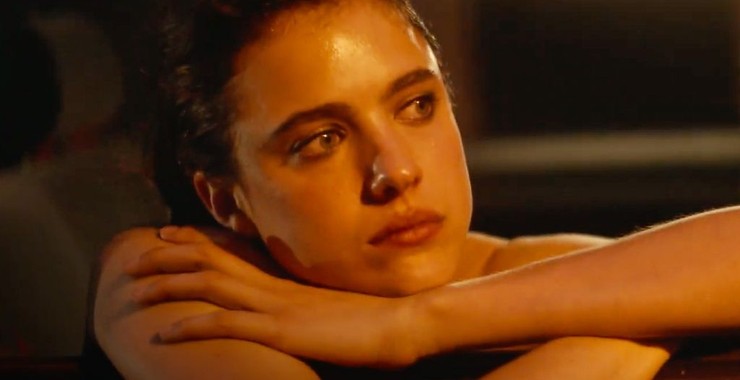
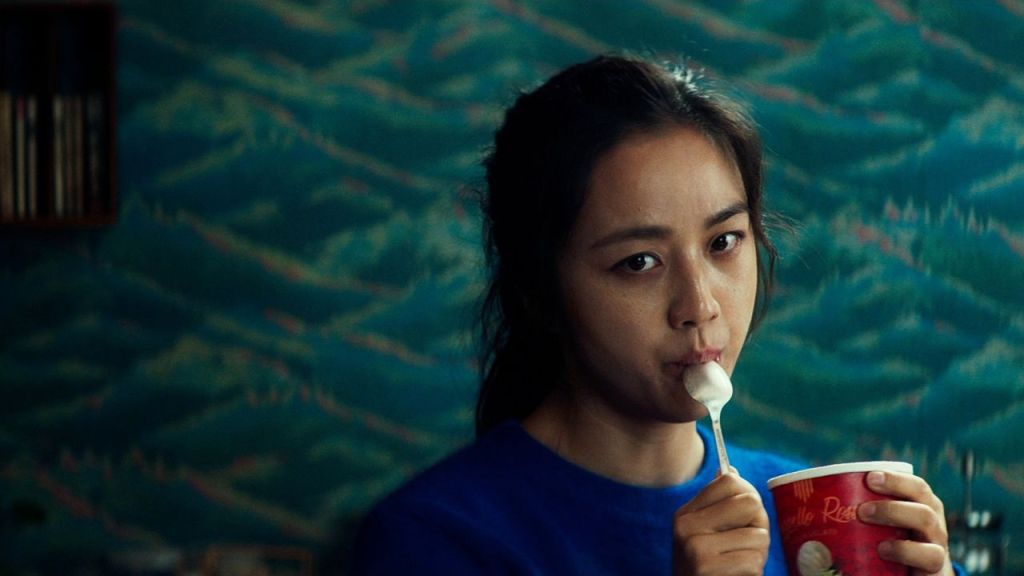
3. Right Now, Wrong Then (Hong, S. Korea)

Right-Now-Wrong-Then-3

Hong Sang-Soo forever. My capsule review at Time Out here.

2. Malgre la nuit (Grandrieux, France)

Malgre-la-nuit-2

The year’s best undistributed film fortunately turned up for a single screening at the University of Chicago’s Film Studies Center with director Philippe Grandrieux in attendance. Some thoughts at Time Out here. My interview with Grandrieux at Offscreen here.

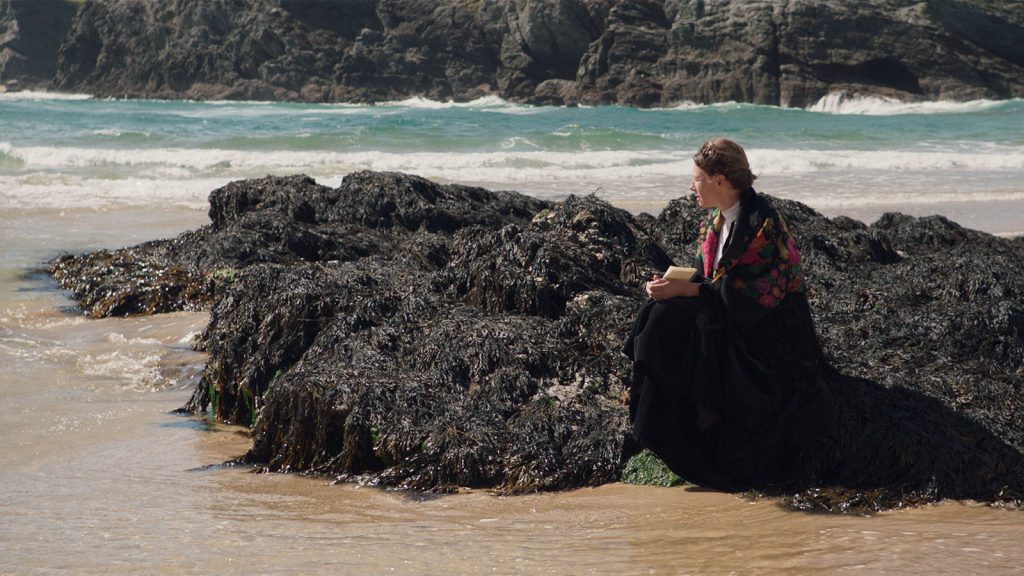
1. A Quiet Passion (Davies, UK/USA)

quiet

My favorite film of the year is also my favorite Terence Davies film since The Long Day Closes nearly a quarter of a century ago. Discussed at length on Episode 15 of my podcast with David Fowlie and Ian Simmons here. My capsule review at Time Out here.

The 40 runners-up:

11. Cosmos (Zulawski, France/Portugal)
12. The Wailing (Na, S. Korea)
13. Moonlight (Jenkins, USA) My capsule review at Time Out here. My interview with director Barry Jenkins on this blog here.
14. Things to Come (Hansen-Love, France)
15. Everybody Wants Some!! (Linklater, USA)
16. Kaili Blues (Bi, China)
17. Kate Plays Christine (Greene, USA)

screen-shot-2016-12-27-at-8-36-50-pm

I didn’t review Robert Greene’s superb provocation earlier because I felt like there was a proverbial “conflict of interest.” I knew I’d be interviewing him following its Chicago premiere and I’d also programmed his previous film, Actress, at my Pop-Up Film Fest last year. But with each week that’s passed since I first saw it, I’ve become more convinced that Kate Plays Christine is a genuinely groundbreaking work; how else to account for the not just divisive but schizoid critical reaction? Kate Sheil (aka the American Isabelle Huppert) surely deserves an award for her astonishing “performance” in this non-fiction film where she plays not only Christine Chubbuck, a news anchor who notoriously committed suicide on air in 1974, but also herself, and deliberately dissolves the line between traditional notions of “good” and “bad” acting in the process. This is nowhere more apparent than in the film’s controversial final scene — a thematically complex moment of extended self-reflexivity that can be read at least three different ways at once: Sheil, who has been flirting with co-auteur status all along, finally assumes full ownership of the project by addressing the camera and criticizing not just Greene but the T.V. audience within the movie and the audience of the movie itself. Misguided critics — some of whom actually included Kate Plays Christine on their “Worst of the Year”(!) lists — have accused the filmmakers of being “exploitative” and “self-serving.” Perhaps only a film that so thoroughly does the opposite (i.e., questions its own motives and generously invites viewers into a meaningful dialogue about the process of both making and consuming images) could inspire such a misreading.

18. Krisha (Shults, USA)
19. Creepy (Kurosawa, Japan)
20. The Other Side (Minervini, Italy/France)
21. Staying Vertical (Guiraudie, France) My capsule review at Cine-File here.
22. The Love Witch (Biller, USA) My capsule review at Time Out here.
23. Viaje (Fabrega, Costa Rica) My capsule review at Time Out here.
24. The Handmaiden (Park, S. Korea)
25.  Hail, Caesar! (Coen/Coen, USA)
26. The Measure of a Man (Brize, France) Discussed with Scott Pfeiffer on Episode 10 of my podcast here.
27. Tower (Maitland, USA) – Music Box
28. L’Attesa (Messina, Italy/France) – Siskel Center. My interview with Juliette Binoche here.
29. Sully (Eastwood, USA)
30. In Transit (Maysles/True/Usui/Walker/Wu, USA) My capsule review at Time Out here.
31. Long Way North (Maye, Denmark/France) My capsule review at Cine-File here.
32. Fire at Sea (Rosi, Italy)
33. Born to Be Blue (Budreau, Canada) My review on this blog here.
34. Three (To, Hong Kong) My review on this blog here.
35. Paterson (Jarmusch, USA)
36. Sweet Dreams (Bellocchio, Italy) My capsule review at Cine-File here.
37. The Fits (Holmer, USA)
38. Harmonium (Fukada, Japan) My capsule review at Cine-File here.
39. Beyonce: Lemonade (Joseph/Knowles, USA)
40. Cameraperson (Johnson, USA)
41. Under the Shadow (Anvari, UK/Iran)
42. Embrace of the Serpent (Guerra, Colombia)
43. Sunset Song (Davies, UK)
44. The Arbalest (Pinney, USA)
45. Malaria (Shahbazi, Iran)

screen-shot-2016-12-27-at-9-18-04-pm

I was fortunate to be able to host a screening of this and participate in a Q&A with writer/director Parviz Shahbazi, one of Iran’s most important filmmakers (even if he’s not as well known on these shores as some of his colleagues), at Oakton Community College several months before the film had its official U.S. premiere at the Chicago International Film Festival. This harrowing drama about inter-generational conflict in contemporary Tehran, provocatively set against the backdrop of the celebrations following the “Iran nuclear deal,” couldn’t be timelier and deserves to be much more widely seen.

46. The Conjuring 2 (Wan, USA/UK) Discussed on Episode 13 of my podcast with Pam Powell here. My review on this blog here.
47. Being 17 (Techine, France)
48. O.J.: Made in America (Edelman, USA)
49. Mad (Putka, USA)
50. The Academy of Muses (Guerin, Spain)


%d bloggers like this: